
Where to stay in Vienna: which district suits which traveller
For a short first visit where you want to walk almost everywhere, stay in the Innere Stadt. Wieden, Mariahilf and Neubau suit travellers who want cafés, museums and shops on the doorstep; Leopoldstadt suits families and runners; the Hauptbahnhof area suits anyone arriving by rail. Favoriten is the choice for visitors who prefer an everyday Vienna and a direct U1 ride to the centre over a postcard address.
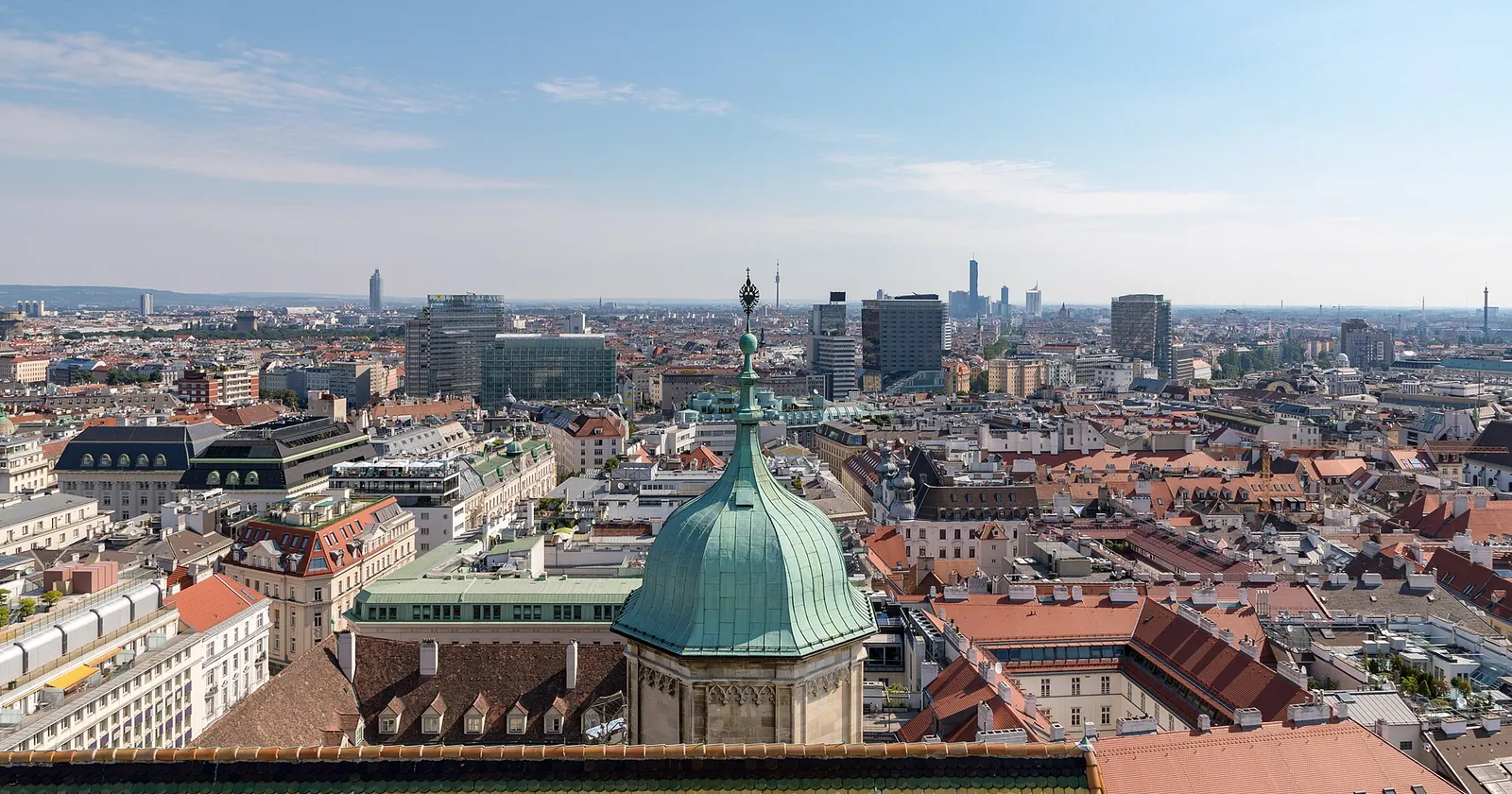
Innere Stadt: short walks, plenty of company
The 1st district is Vienna's historic centre and has been a UNESCO World Heritage site since 2001. St Stephen's Cathedral, the Hofburg and the State Opera are within walking distance of one another, and the U1 and U3 underground lines cross at Stephansplatz.
It suits a weekend break, opera and concert evenings, and anyone who wants to walk home after dinner. The trade-off: the centre is organised around visitors rather than daily life. To see how the city lives away from the sights, you need the districts beyond the Ringstraße.
Leopoldstadt: the Prater, the Augarten and the Danube Canal
The 2nd district lies between the Danube Canal and the Danube. Its strength is green space: the Prater, with the Wurstelprater funfair and the Giant Ferris Wheel, the Hauptallee avenue running from Praterstern to the Lusthaus, and the Baroque Augarten.
The Karmelitermarkt, one of the city's oldest surviving markets, sits in the Karmeliterviertel. The U1 stops at Nestroyplatz and at Praterstern, where it meets the U2. Leopoldstadt works well for families, for runners and for visitors who want to be central without being in the thick of the crowds. Towards the Prater and the river, though, the trip to the classic sights gets longer.
Wieden, Mariahilf and Neubau: cafés, museums, shopping
Districts 4, 6 and 7 adjoin the centre to the south and west. Wieden has the Karlskirche and the Freihausviertel, and the U1 stops there at Taubstummengasse. The Naschmarkt, which stretches from Karlsplatz to Kettenbrückengasse, has belonged entirely to Mariahilf since 2009.
Mariahilfer Straße marks the boundary between the 6th and 7th districts, with the U3 running beneath it. Neubau is home to the MuseumsQuartier, including the Leopold Museum and mumok, and to the Biedermeier lanes of Spittelberg. It suits travellers who like going out in the evening, enjoy coffee houses and small shops, and still want to walk to the old town. Do not count on quiet in every street.
Around the Hauptbahnhof: practical for rail travellers
Vienna's main station is in the 10th district and has been fully operational since December 2015. Two new neighbourhoods have grown up around it: the Quartier Belvedere and the Sonnwendviertel with its Helmut-Zilk-Park.
The appeal is practical. Long-distance trains and direct trains to the airport leave from here, the U1 stops at Südtiroler Platz–Hauptbahnhof, and tram D runs past Schloss Belvedere towards the Opera. The Upper Belvedere is within walking distance. The newly built quarter lacks the atmosphere of older streets, but the platform is a short walk away for an early departure or a late arrival.
Favoriten: on the U1, more everyday than the centre
South of the station lies Favoriten proper, one of Vienna's most populous districts. Between the Gürtel and Reumannplatz, Favoritenstraße is a pedestrian zone and the district's main shopping street, with the Viktor-Adler-Markt right beside it. The Amalienbad on Reumannplatz is a municipal indoor pool with Art Deco and Art Nouveau features, and the U1's southern terminus at Oberlaa is next to the Therme Wien spa.
From Keplerplatz station the U1 takes you four stops to Stephansplatz and one to the Hauptbahnhof. Right by that station, at Favoritenstraße 118, is Domenig House – Design Apartments, inside the Domenig-Haus that Günther Domenig built between 1975 and 1979 with a curved stainless steel façade, a sight in its own right.
To be plain about it, Favoriten is not picture-book Vienna. Market stalls, snack bars and everyday shops set the tone rather than palaces and concert cafés, and the classic sights are not on the doorstep. Travellers who see that as an advantage will find a lively neighbourhood with very good connections. The guide to Favoriten goes into detail.
How to decide
- Two nights, first time in Vienna: the Innere Stadt or the adjoining districts 4, 6 and 7.
- With children or running shoes: Leopoldstadt, close to the Prater or the Augarten.
- Arriving by train, flying on early: the Hauptbahnhof or an address on the U1.
- A longer stay with more everyday life: Favoriten or another residential district with the U-Bahn outside the door.
The nearest U-Bahn station usually matters more than the district number. Getting around Vienna explains the routes from the airport and the Hauptbahnhof, and apartment or hotel covers the other half of the decision. Because of long-running works on the S-Bahn main line, check current connections before you travel.
Quick answers
Which district is best for a first visit to Vienna?
For a short first visit, the Innere Stadt or the adjoining districts of Wieden, Mariahilf and Neubau, because many sights are within walking distance. With a U-Bahn station nearby, Leopoldstadt and Favoriten work well too.
Is Favoriten a good area to stay in?
Yes, if connections matter more to you than a historic setting. The U1 runs from Keplerplatz to Stephansplatz in four stops; the neighbourhood itself is an everyday residential and shopping district with a market and a pedestrian zone.
Where should I stay if I am arriving by train?
Around the Hauptbahnhof or along the U1, which stops there at Südtiroler Platz–Hauptbahnhof. Direct trains to the airport also leave from the Hauptbahnhof.
If Favoriten fits your trip, enquiries to Domenig House – Design Apartments at Favoritenstraße 118 are welcome by WhatsApp or phone on +43 676 5763838.
Sources (31)
Researched: 15 November 2026
- U-Bahn-Linie U1 (Wien) – Wikipedia
- Wiener Linien – Haltestellen der Linie U1 Richtung Leopoldau
- Historisches Zentrum von Wien – Wikipedia
- Innere Stadt (Wien) – Wikipedia
- Leopoldstadt – Wien Geschichte Wiki
- Prater – wien.info
- Wiener Prater – Wikipedia
- Karmelitermarkt – Wien Geschichte Wiki
- Mit ivie das Karmeliterviertel entdecken – wien.info
- Wieden (Wien) – Wikipedia
- U-Bahn-Station Taubstummengasse – Wikipedia
- Wiener Naschmarkt – Wikipedia
- Naschmarkt – Stadt Wien
- U-Bahn-Station Zieglergasse – Wikipedia
- Neubau (Wien) – Wikipedia
- Wining and dining in Spittelberg – vienna.info
- Wien Hauptbahnhof – Wikipedia
- Geschichte, Daten & Fakten – BahnhofCity Wien Hauptbahnhof (ÖBB)
- Travelling to Vienna Airport by train – ÖBB
- Sperre der S-Bahn-Stammstrecke – Wiener Linien
- Upper Belvedere, visitor information – Belvedere
- Quartier Belvedere – Wikipedia
- Sonnwendviertel – Wien Geschichte Wiki
- Helmut-Zilk-Park – Wikipedia
- Favoriten – Wikipedia
- Favoritenstraße – Wikipedia
- Viktor-Adler-Markt – Stadt Wien
- Amalienbad Pool – vienna.info
- U-Bahn-Station Oberlaa – Wikipedia
- Wiens radikalstes Haus (Domenig-Haus) – wien.info
- Domenig-Haus – Wikipedia
Keep reading
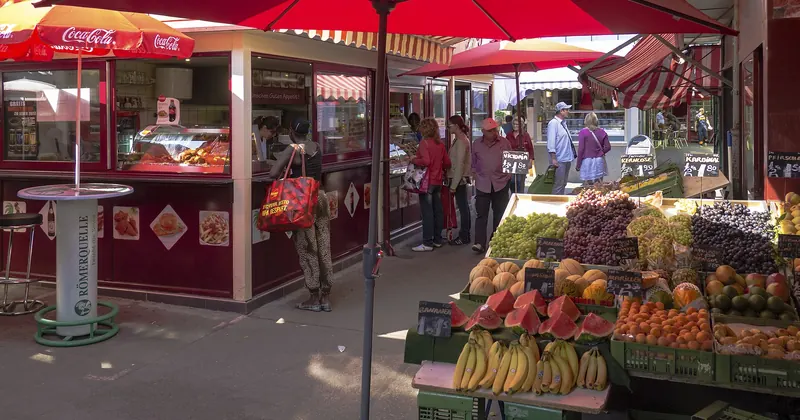
Vienna’s markets: Viktor-Adler-Markt, Naschmarkt and more
From the loud “Platzl” in Favoriten to the Naschmarkt: what six Vienna markets are known for and which line takes you there.
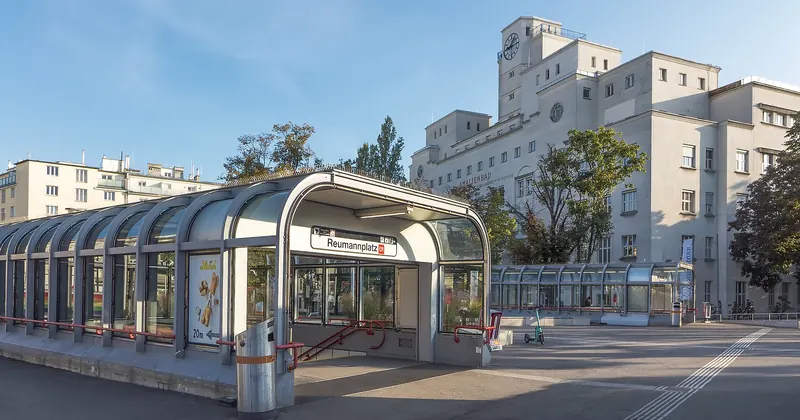
Favoriten: a guide to Vienna’s 10th district
A working-class district with a big market, a new station quarter and parks on the southern edge: what Favoriten is like and what to see along the U1.
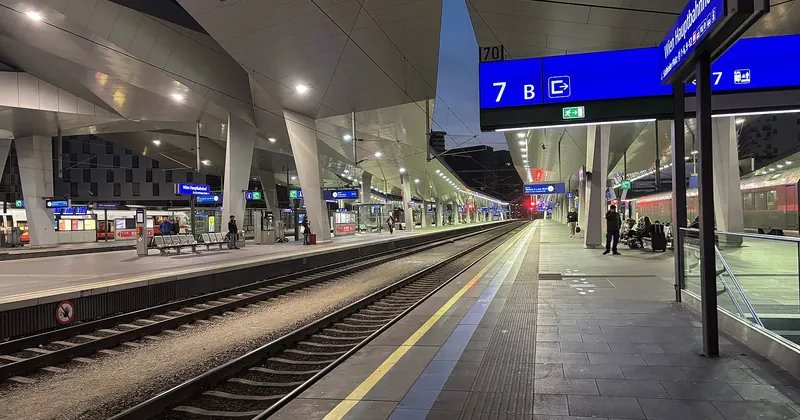
Getting around Vienna: U1, airport and station to Keplerplatz
U-Bahn, trams and S-Bahn in brief, and how to reach Keplerplatz on the U1 from Vienna Airport and from Wien Hauptbahnhof.