
Radical architecture in Vienna: a tour beyond the Ringstraße
Most of Vienna’s unconventional 20th and 21st century buildings stand outside the Ringstraße, and they are linked by U-Bahn, tram and bus. This route starts at the Domenig-Haus in Favoriten, continues via the T-Center, the Gasometer and the Hundertwasserhaus to the 1st district, and ends with three buildings on the edge of the city. Allow two days to see them all.
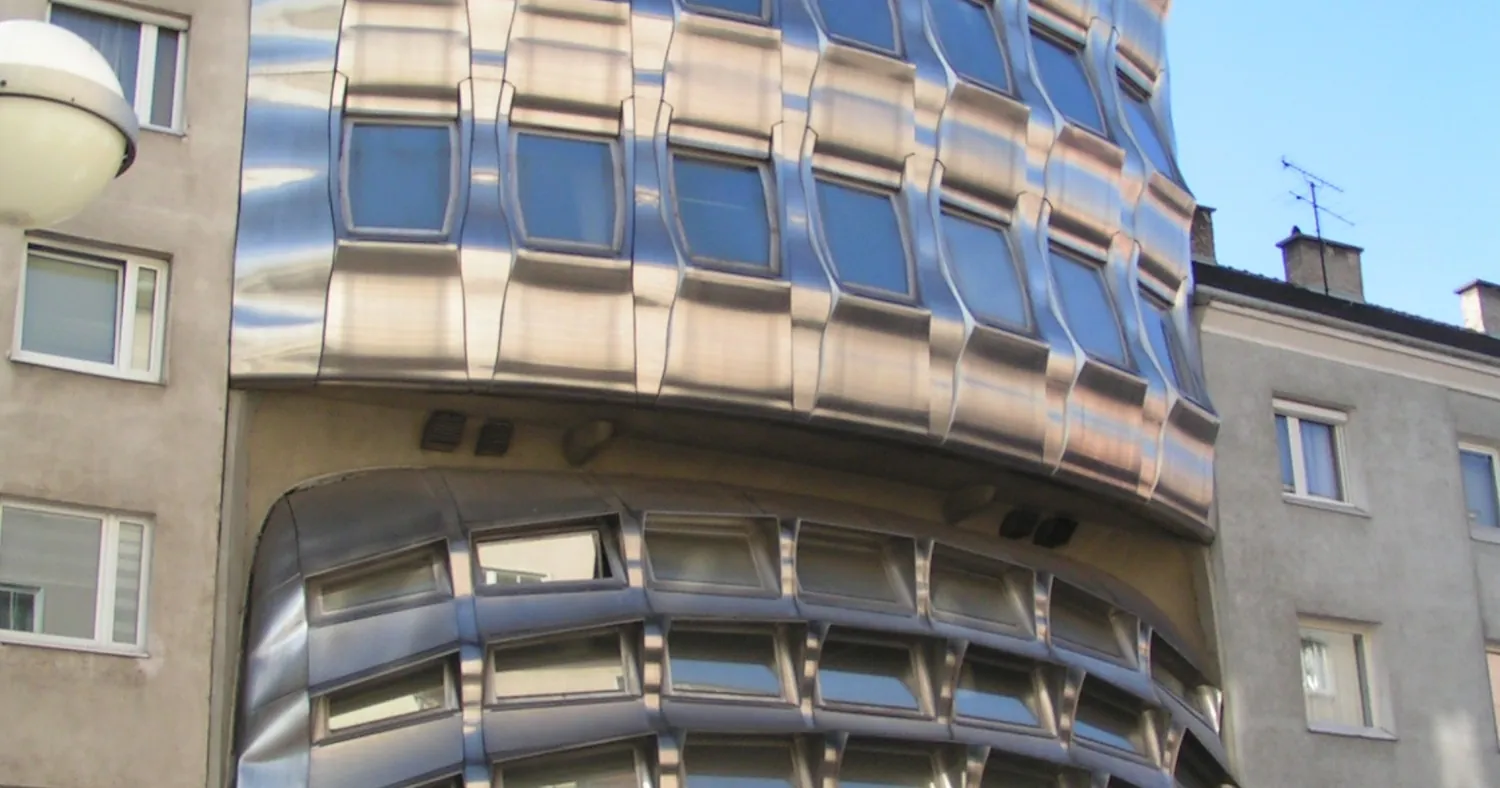
Starting point: the Domenig-Haus in Favoriten
The tour begins at Favoritenstraße 118, in the pedestrian zone of the 10th district, right by Keplerplatz station on the U1. Günther Domenig built the house between 1975 and 1979 as a branch of the Zentralsparkasse bank. Its curved stainless steel façade looks as though it had been squeezed between the neighbouring buildings; Domenig called it the “Haus mit dem Knick”, the house with the kink.
It is regarded as the most important early work of the “Grazer Schule” (Graz School) and was fiercely debated when it was completed. The façade and the first two floors have been a listed monument since October 2005. Today the building houses Domenig House – Design Apartments. For more on the architect, see the profile of Günther Domenig.
Landstraße and Simmering: T-Center, Gasometer, Hundertwasserhaus
From Keplerplatz it is one station on the U1 to Hauptbahnhof, where tram 18 leaves for the St. Marx stop. Here stands the T-Center (Rennweg 97–99), built from 2002 to 2004 to designs by Günther Domenig, Hermann Eisenköck and Herfried Peyker on the site of the former slaughterhouse. The office building was conceived as a reclining sculpture, about 255 metres long, with one wing cantilevering far out. It can be viewed from outside.
Tram 18 continues to Schlachthausgasse on the U3, and from there it is two stations to Gasometer. The four brick gas holders, built between 1896 and 1899, were converted from 1999 to 2001 into flats, shops and an events hall. Each went to a different practice: Jean Nouvel, Coop Himmelb(l)au, Manfred Wehdorn and Wilhelm Holzbauer.
The Hundertwasserhaus, on the corner of Kegelgasse and Löwengasse in the 3rd district, was built from 1983 to 1985 as municipal housing to a concept by the painter Friedensreich Hundertwasser, realised with the architects Josef Krawina and Peter Pelikan. People live here, so it can only be seen from the street. Tram 1 stops at Hetzgasse.
In the 1st district: Haas-Haus, Postsparkasse and Secession
Three buildings stand in the 1st district but belong on this list all the same, because they break with the historicism of the Ringstraße.
- Haas-Haus (Stock-im-Eisen-Platz; U1/U3 Stephansplatz): Hans Hollein’s commercial building opposite St Stephen’s Cathedral opened in 1990 and was long disputed because of its site. Its mirrored oriel is the feature to look for.
- Postsparkasse (Georg-Coch-Platz 2): Otto Wagner built the postal savings bank in two phases, 1904–1906 and 1910–1912. The façade is clad in granite and marble slabs whose bolts are left visible, and the banking hall has a glass roof.
- Secession (Friedrichstraße 12; U1/U2/U4 Karlsplatz): Joseph Maria Olbrich’s exhibition hall of 1897–98 is older than every other stop here, but it is where this story begins. It is crowned by a dome of gilded laurel leaves and houses Gustav Klimt’s Beethoven Frieze.
On the edge of the city: Karl-Marx-Hof, Campus WU and Wotruba church
These three are far apart and are best treated as separate trips.
- Karl-Marx-Hof (Heiligenstädter Straße 82–92; U4 Heiligenstadt): Karl Ehn’s municipal housing block, built from 1927 to 1930, is more than a kilometre long. Inside the complex, the exhibition “Das Rote Wien im Waschsalon” tells its story.
- Campus WU (Welthandelsplatz; U2 Messe-Prater or Krieau): the University of Economics and Business opened its campus beside the Prater in 2013. The Library & Learning Center at its centre is by Zaha Hadid Architects; other buildings are by BUSarchitektur, Atelier Hitoshi Abe, CRAB studio, Estudio Carme Pinós and NO.MAD Arquitectos. The open spaces are public.
- Wotruba church (Ottillingerplatz 1, Mauer, 23rd district): the Church of the Most Holy Trinity was built from 1974 to 1976 to a design by the sculptor Fritz Wotruba, with Fritz Gerhard Mayr as planning architect. It is made of irregularly stacked concrete blocks. Bus 60A stops at Kaserngasse, and from there the way leads uphill on foot.
How should you split the route?
The Domenig-Haus, T-Center, Gasometer and the 1st district fit into one day: the U3 runs from Gasometer to Stephansplatz without a change, and from there it is four stations on the U1 back to Keplerplatz. For the Hundertwasserhaus, tram 1 can be boarded at Schwedenplatz.
That leaves the outlying buildings for a second day. Change at Karlsplatz for the U4 to Heiligenstadt, and at Praterstern for the U2 towards Campus WU. For Mauer, take the U4 to Hietzing, tram 60 to Maurer Hauptplatz and then bus 60A.
Many of these buildings can only be seen from outside. Where interiors are open to visitors, as at the Secession, the Waschsalon or the Wotruba church, check current opening times before you set out. Lines and tickets are covered in Getting around Vienna, and the classic sights in the three-day itinerary along the U1.
Quick answers
Where does the architecture tour start?
At the Domenig-Haus, Favoritenstraße 118 in the 10th district, right by Keplerplatz station on the U1.
Can you go inside the Hundertwasserhaus?
No. It is municipal housing with residents and can only be viewed from the street.
Which buildings in Vienna are by Günther Domenig?
The Domenig-Haus in Favoriten (1975–1979) and the T-Center in St. Marx (2002–2004), which he designed with Hermann Eisenköck and Herfried Peyker.
To stay at the starting point of this tour, ask about Domenig House – Design Apartments inside the Domenig-Haus. Enquiries by WhatsApp or phone: +43 676 5763838.
Sources (29)
Researched: 15 November 2026
- wien.info – Wiens radikalstes Haus (Domenig-Haus)
- Wikipedia (DE) – Domenig-Haus
- Architekturzentrum Wien – Domenig, Eisenköck, Peyker: T-Center St. Marx, 2002–2004
- Baunetz Wissen – T-Mobile-Center St. Marx in Wien
- Birkhäuser – T-Center St. Marx (Buchbeschreibung)
- Wiener Linien – Linie 18, Haltestellen
- Wiener Linien – Schulbeginn bringt dichtere Intervalle und neue Öffi-Verbindungen (Linie 18)
- Wien Geschichte Wiki – Gasbehälter Simmering
- archiweb – Wiener Gasometer
- Wikipedia (EN) – Gasometer station
- Horst Prillinger – Line U3 Ottakring–Simmering (station list)
- Horst Prillinger – Line U1 Leopoldau–Oberlaa (station list)
- Wikipedia (EN) – Keplerplatz station
- Wikipedia (EN) – Hundertwasserhaus
- ganz-wien.at – Hundertwasserhaus
- Wikipedia (EN) – Haas House
- wien.info – Österreichische Postsparkasse von Otto Wagner
- Wikipedia (EN) – Austrian Postal Savings Bank
- wien.info – Secession
- Wikipedia (EN) – Karl-Marx-Hof
- Das Rote Wien im Waschsalon Karl-Marx-Hof – Folder
- WU Wien – Architektur & Gebäude
- WU Wien – Anfahrtsplan Campus WU
- Architekturzentrum Wien – Campus WU
- wien.info – Campus WU
- Wikipedia (EN) – Wotruba Church
- wien.info – Kirche Zur Heiligsten Dreifaltigkeit (Wotrubakirche)
- Wiener Linien – Buslinie 60A, Haltestellen
- Spotted by Locals – Wotruba Church (Anreise)
Keep reading
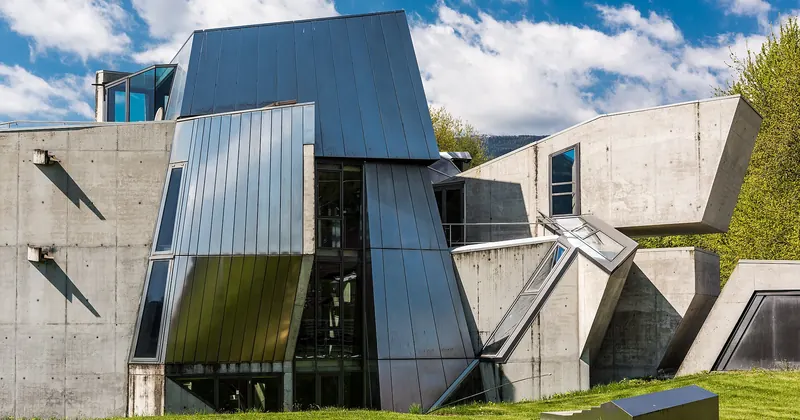
Günther Domenig: the architect and the buildings you can see
A short profile of the Austrian architect Günther Domenig, with a list of his buildings that can be seen today.
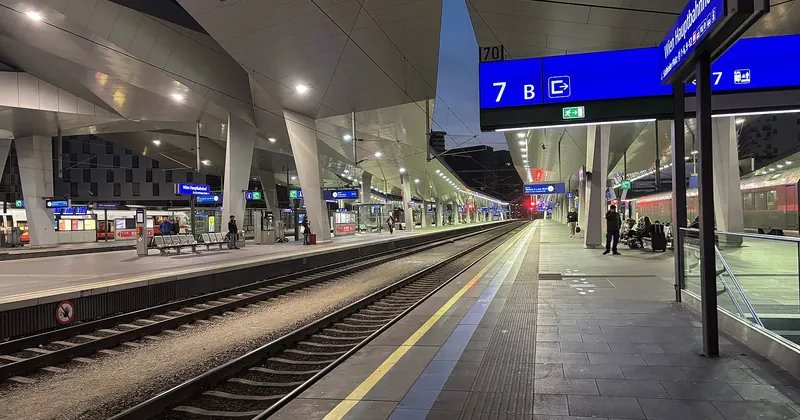
Getting around Vienna: U1, airport and station to Keplerplatz
U-Bahn, trams and S-Bahn in brief, and how to reach Keplerplatz on the U1 from Vienna Airport and from Wien Hauptbahnhof.
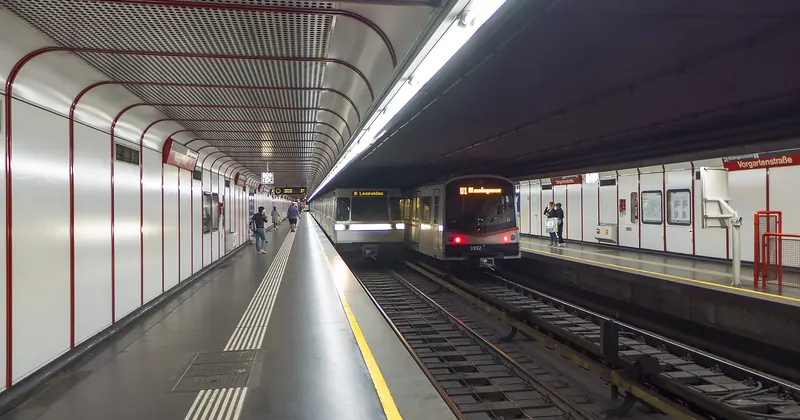
Vienna in three days: an itinerary along the U1
A realistic three-day plan for a first visit to Vienna that needs just one change of line: everything else hangs on the U1.